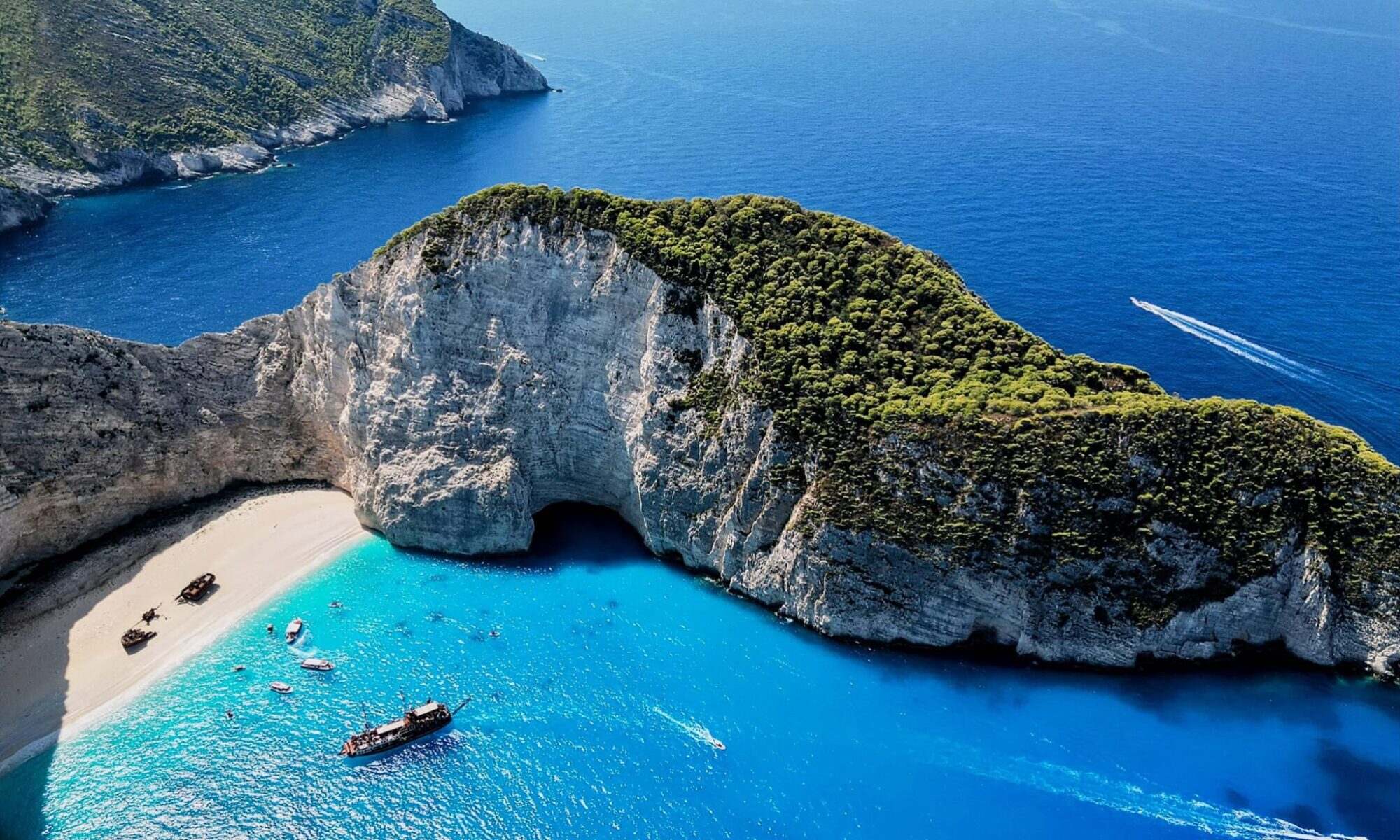


Next stop – Pula on the Adriatic Sea but on the tip of the Istrian Peninsula. This meant slightly different food and wine varieties. But the blue waters and temperate climate continued!
Pula by Sea

We had a bumpy ride getting to Pula. Our early morning ferry from Hvar to Split was cancelled. So we missed our direct flight to Pula. No worries, Croatian Air had another flight to Pula, except it connected through Zagreb and Zadar. Croatian Airlines was great about rebooking and even held our flight for us in Zagreb after a delay. So we eventually made it to Pula, but our bags did not! The baggage guy dutifully filled out a paper form and that did not instill confidence. Luckily, they delivered our bags the next afternoon.
For our first day in Pula, we planned a kayaking and cliff jumping trip with a local guide. Since our luggage had not arrived, we stopped by a nearby mall and bought new bathing suits and beach wear just in time. Croatia has truly fantastic malls, like I used to enjoy when I was a teenager. Lucky for us!


The kayaking tour was great. The water was beautiful and the cliffs and rocky coastline were perfect. Our guide took us to a 47 foot high cliff and told us to jump! As usual, Dusty was the braver one and jumped right off. I chickened out and was only able to jump off the “baby” cliff. Our guide also got great footage of us swimming clear water and showing off the underground caves. It was truly a beautiful place to kayak and swim.


We also visited a beach on the other side of Pula. Again, the water was perfectly clear and blue. We braved the cool water and went for a swim. It was so refreshing and well worth the chill. If that was our last swim of the year, it was a good one!

Pula – by Land
Next we explored Pula the city. Pula is an ancient settlement. The Romans conquered Pula in 177 BC and the city flourished under their rule. As a typical Roman town, it had city walls and gates, aqueducts and an amphitheater. Several of these are still standing today. Most spectacularly, Pula Arena, constructed between 27 BC and 68 AD, is mostly intact today. We first saw the arena at night, and that view was spectacular!


Like other Croatian towns we visited, Pula has been ruled by the Romans, Venetians, French, and the Austrians. After World War I and the collapse of the Austrian-Hungarian Empire, Pula went to the Italians. The Italians forced the Croatians to speak Italian and assimilate into their culture. The locals spoke of the time under Italian Fascist rule as a dark time.

After Mussolini fell, Pula was occupied by the Germans and subsequently bombed by the Allies at the end of World War II. Eventually, Pula joined Yugoslavia and remained a part of that country until its collapse in 1991. Interestingly, the locals in large part revere Tito – the famous communist leader of Yugoslavia from 1945 until his death in 1980. In school, we were generally taught that Tito was an authoritarian dictator and was one of the bad guys. It was interesting to hear a different perspective throughout Croatia and Slovenia from those who lived through it. Many of the people we met spoke wistfully of Yugoslavia and said they would go back without question.

Rovinj
We had some free time in Pula, and took a short bus to the nearby town of Rovinj. Rovinj looks like a little Venice and features Venetian architecture. It was a picturesque fishing port. We only spent a few hours there. But enjoyed wandering through the narrow cobblestone streets and the great views of the blue Mediterranean sea. We also enjoyed a glass of local rosé in a seaside cafe.


Zagreb
The capitol! And our last stop in Croatia. Zagreb is also an ancient city with a vibrant old town. What is now known as Zagreb initially consisted of two settlements – Gradec and Kaptol, founded in the 11th and 12th centuries. The two settlements fought for centuries until they were finally consolidated into Zagreb in 1850. Today you can visit both old town and see the former Medveščak creek (present-day Tkalčićeva Street) which divided the towns.

Kaptol and Gradec built walls and fortifications to protect from invasions from the Ottoman Empire. Some of the walls remain today. But only one gate remains – the Stone Gate – believed to have been built in the 13th century. It also serves as a shrine of Mother Mary. A painting inside the gate somehow survived the fire of 1731. When you visit today, there are people praying and lighting candles.

One other interesting ritual, Zagreb fires the Grič cannon canon every day at noon. The cannon has fired, without fail, every day at noon for 110 years. We witnessed it and got a wave from the cannon operator. A very fun tradition!

In 2020, Zagreb was hit by an earthquake with a magnitude of 5.3 with the epicenter just 7 km north of the city center. The modern buildings remained largely intact, but the old town was hit hard. One of the spires of the iconic Zagreb Cathedral broke off and landed on the Archbishop’s Palace. The second spire had to be removed because it was so badly damaged and leaning. A part of the roof of the Croatian parliament collapsed. Most of the museums in the city were damaged and some, including the Croatian History Museum, remained closed today. Understandably, there was a ton of construction going on which resulted in closures, noise, and dust.


So Many Museums
With many of the classic attractions closed, we turned to Zagreb’s incredible museums. There is a claim, potentially made up, that Zagreb has more museums per capita than any other city. There were the classic museums, including the City of Zagreb Museum. It was incredible, covering ancient culture all the way through post-World War II. It’s very well done and full of treasures. We also visited the small but impactful 1991/1995 Zagreb Rocket Attacks Memorial Center. During the civil war, the Yugoslavian army struck Zagreb with rockets twice. The museum somberly showed the damage caused by the war and the human toll.
But Zagreb also has more unique museums. The Museum of Broken Relationships – exhibits consist of artifacts of relationships with a back story submitted by people from all over the world. Of course we visited the Museum of Chocolate which takes you through the development of chocolate in South America through the centuries. Plus, the museum gave you samples! We stopped by the HaHa House, a comedy museum that you enter through a slide and into a ball pit. Haven’t done that in many years!
The Museum of Illusions was interactive and so much fun. It played with mirrors, perspective, and optical illusions. We have great photos from its exhibits!


But our absolute favorite was the video game museum. The exhibits started with the 70’s with the first video games and went to present day. And you could play the games! So we played Frogger and Pac Man on arcade machines. My favorite though was playing Dr. Mario on regular Nintendo and Zelda on Super Nintendo. We could have stayed in the “museum” for hours. I would highly recommend!

This completes our time in Croatia. It was a beautiful country. The people were lovely. The food was fresh. The wine was interesting and delicious. It was 18 days well spent. We would love to come back in the Spring/Summer when it’s warm enough to really enjoy the water.
But now it’s on to England. A visit to England does not fit in with the rest of our trip. But there was a very good reason for this out of the way stop!
Thank you for reading! Let us know if you have questions and feel free to comment here!